
Selecting a reliable China-based manufacturer requires more than comparing prices or browsing attractive product photos. BLDC Parallel Shaft Gearmotors must match real operating conditions, including torque, speed, voltage, duty cycle, and available installation space. A suitable supplier should explain these factors clearly, not hide them behind general performance claims.
Experienced manufacturers usually support customers with motor calculations, gearbox selection, sample testing, and production feedback. Their engineers can review conveyor loads, acceleration demands, shaft arrangements, and continuous operating temperatures. Practical details matter. For example, a compact gearmotor may fit a 120-millimeter frame, yet still require stronger bearings for repeated starts. Quality control should include winding inspection, gear backlash checks, noise testing, insulation verification, and final load testing. Traceable records make later troubleshooting easier.
Good engineering is not perfect engineering. No supplier gets every application right on the first attempt. A responsible manufacturer admits uncertainty and recommends prototype validation before large-volume purchasing. Buyers should request complete datasheets, efficiency figures, protection ratings, lead times, warranty terms, and test evidence. They should also confirm whether specifications remain stable between samples and mass production.
This article introduces key evaluation points for identifying a dependable China BLDC Parallel Shaft Gearmotors Manufacturer. It focuses on manufacturing experience, technical communication, customization capability, and after-sales reliability. The goal is practical selection, not exaggerated promotion. A motor that runs quietly on a test bench may behave differently under dust, heat, or frequent reversals. Careful verification protects equipment performance and supports long-term purchasing decisions.
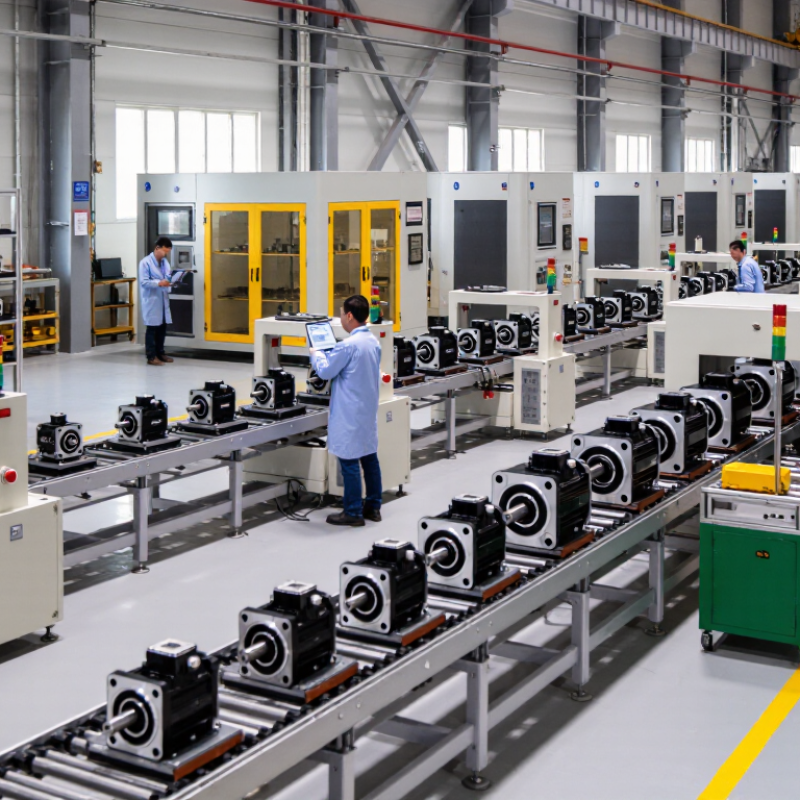
BLDC parallel-shaft gearmotors combine a brushless DC motor with a speed-reducing gearbox. The motor creates controlled rotation, while the gearbox increases output torque and lowers speed. Parallel shafts keep the input and output axes aligned beside each other. This compact layout suits conveyors, packaging equipment, rollers, and automated positioning systems.
The motor section usually includes a rotor with permanent magnets, a stator, Hall sensors, and electronic commutation. The gearbox may use spur or helical gears, bearings, seals, and hardened shafts. Helical gears often reduce vibration, although they can create additional axial loads. During inspection, check shaft alignment, lubricant condition, and mounting rigidity. Small errors matter.
Core ratings should match the real working cycle. Check rated voltage, continuous torque, peak torque, output speed, gear ratio, power, efficiency, and duty cycle. Also verify radial load, axial load, allowable temperature, insulation class, protection rating, noise, and backlash. A 24 V motor may not deliver its rated torque inside a hot, enclosed cabinet. That detail is often missed. A neat specification sheet can still mislead. In practice, measure acceleration time, housing temperature, and current under the actual load. Leave starting torque margin; otherwise, repeated stops may expose weaknesses that a steady test never shows.
China Best BLDC Parallel Shaft Gearmotors Manufacturer
A BLDC parallel shaft gearmotor can deliver 80–90% efficiency when its motor, gearing, and load are correctly matched. Electronic commutation replaces mechanical brushes with controlled switching through a driver. This reduces brush wear and supports stable operation in compact equipment. The result is practical: less heat near the gearbox, longer service intervals, and more usable output power.
In production, engineers check torque, speed, duty cycle, and starting load before selecting the motor. Hall sensors can provide reliable rotor positioning at low speed. Sensorless control may reduce wiring, but it can respond less confidently during startup. A small conveyor may run smoothly at 60 revolutions per minute, while a heavily loaded actuator demands stronger current control. Efficiency is not a fixed label. It changes with voltage, temperature, lubrication, alignment, and operating point.
Real machines are less tidy. An impressive test result may not represent dusty workshops or repeated reversals. We therefore recommend testing samples under the customer’s actual load profile, including stall events and thermal recovery. Inspectors should record winding temperature, gearbox noise, current draw, and output torque. This evidence makes performance claims more reliable. Sometimes, a slightly larger motor produces better lifetime value than a smaller unit operating near its limit. That detail is easy to overlook.
China Best BLDC Parallel Shaft Gearmotors Manufacturer
Selecting a 24–48 V BLDC parallel shaft gearmotor starts with the load, not the voltage label. A 48 V system usually carries lower current than a 24 V system at equal power. That can reduce cable heating and connector size. IEA reports that electric motor systems consume roughly 46% of global electricity. Efficiency deserves attention. Choose the required output speed first, then calculate the ratio: gear ratio = motor speed ÷ output speed. A 3,000 rpm motor with a 15:1 gearbox delivers about 200 rpm before slip and losses.
Torque selection needs practical margin. Output torque equals motor torque × gear ratio × gearbox efficiency. If the conveyor needs 18 N·m continuously, a 20–30% service margin suggests a rated target near 22–24 N·m. Starting torque may be higher, especially with heavy rollers or frequent reversals. For a 24 V, 600 W load, current approaches 25 A before losses; at 48 V, it approaches 12.5 A. These figures expose weak wiring quickly. Still, calculations can mislead. Real friction changes with temperature, alignment, and bearing wear.
Tips: Measure breakaway torque with the actual mechanism. Do not select from peak torque alone. Check the gearbox’s continuous rating, duty cycle, backlash, and thermal limit. Industry motor efficiency studies consistently show that oversized or poorly controlled systems waste energy, even when the motor looks efficient. Leave space for acceleration. A smaller ratio may improve speed response, but it can reduce available torque. Test under the worst load, not the easiest one.
China’s BLDC parallel shaft gearmotors are built for compact machinery, conveyor systems, and automated equipment. Manufacturing standards matter as much as torque and speed. A dependable factory uses ISO 9001 procedures to control drawings, incoming materials, assembly records, and final inspections. Each motor should have traceable data, not merely a quality slogan.
IEC 60034 guides important motor performance checks, including temperature rise, efficiency, insulation, and operating stability. In practical production, technicians may monitor vibration, noise, shaft alignment, and current under load. Small details matter. A slight alignment error can increase gearbox wear and reduce service life. Test conditions should be recorded clearly, although laboratory results may not match every field installation.
An IP65-rated enclosure offers protection against dust and low-pressure water jets from any direction. It does not mean the gearmotor can operate underwater or withstand every cleaning method. Proper seals, cable glands, housing joints, and connector placement must support the rating. Experienced manufacturers verify these areas during inspection instead of relying only on appearance. No factory is perfect; occasional rework should lead to corrective action and improved process control. Buyers should request test reports, tolerance data, and application guidance before approving a production batch.
| Data Dimension | Applicable Standard or Technical Item | Verified Technical Meaning | Relevance to BLDC Parallel Shaft Gearmotors | Recommended Evidence or Inspection Method | Compliance Status |
|---|---|---|---|---|---|
| Quality management | ISO 9001:2015 | Specifies requirements for a quality management system, including process control, documented information, customer focus, risk-based thinking, internal audits, and continual improvement. | Supports controlled design, purchasing, assembly, testing, nonconformance handling, and traceability processes. | Review a valid certificate issued by an accredited certification body and confirm that the certification scope covers the relevant manufacturing activities. | Management-system standard |
| Motor safety and performance | IEC 60034-1 | Provides general requirements for rotating electrical machines, including rating, operating conditions, temperature-rise considerations, dielectric tests, and performance-related information. | Applicable to the electric motor portion of a BLDC gearmotor when the design and declared ratings fall within the standard’s scope. | Check the motor datasheet, rated voltage, rated speed, rated torque, insulation system, test records, and nameplate information. | Design-dependent |
| Enclosure protection | IEC 60034-5 | Defines degrees of protection provided by integral enclosures for rotating electrical machines using the IP Code specified in IEC 60529. | Provides the applicable framework for declaring the motor enclosure protection level, such as IP65. | Review an enclosure protection test report from a competent laboratory or an applicable product test record. | Test-based |
| Dust protection | IP6X, first IP digit | The numeral “6” indicates a dust-tight enclosure with no ingress of dust under the applicable test conditions. | Helps protect the motor and internal electrical components from dust contamination in suitable industrial environments. | Verify the IP marking and corresponding dust-ingress test documentation. | IP65 requirement |
| Water protection | IPX5, second IP digit | The numeral “5” indicates protection against water jets from any direction under the applicable test conditions. | Suitable for equipment exposed to cleaning spray or water jets, provided cable entries, connectors, seals, and installation practices maintain the enclosure rating. | Verify the water-jet test record and inspect shaft seals, cable glands, connectors, and mating surfaces. | IP65 requirement |
| IP65 limitation | IP65 does not equal immersion protection | IP65 does not certify protection against temporary or continuous immersion. Immersion protection is represented by higher water-protection levels such as IPX7 or IPX8, when tested and declared. | Prevents incorrect use of a parallel shaft gearmotor in submerged or continuously flooded applications. | Match the declared IP rating with the actual installation environment and cleaning method. | Application control |
| Drive technology | Brushless DC motor | Uses electronic commutation rather than mechanical brushes and a commutator. A controller or drive is required for electronic commutation and speed control. | Provides a compact motor solution for applications requiring controllable speed, repeated starts, and reduced brush maintenance. | Confirm controller compatibility, Hall-sensor or sensorless feedback method, voltage range, current limit, and commutation settings. | Configuration-dependent |
| Gear arrangement | Parallel shaft gearbox | Uses input and output shafts arranged in parallel. The gearbox ratio determines the relationship between motor speed and output speed. | Supports compact mechanical layouts and can provide higher output torque at reduced speed compared with the motor shaft alone. | Check gearbox ratio, output torque rating, service factor, shaft configuration, mounting dimensions, and lubrication requirements. | Configuration-dependent |
| Output speed relationship | Gear ratio calculation | Approximate output speed can be calculated as: output speed = motor speed ÷ gear ratio, subject to load, slip, controller settings, and efficiency. | Provides a practical method for preliminary speed selection without assigning unsupported product-specific values. | Validate the calculation using no-load and loaded speed measurements at the specified voltage and controller settings. | Engineering calculation |
| Output torque relationship | Torque and gearbox efficiency | Approximate gearbox output torque can be estimated as: output torque = motor torque × gear ratio × gearbox efficiency. | Helps evaluate conveyor, automation, packaging, material-handling, and other geared drive applications. | Compare calculated torque with measured torque, rated gearbox torque, peak torque, duty cycle, and service factor. | Engineering calculation |
| Environmental suitability | Operating environment review | IP protection alone does not define resistance to chemicals, high humidity, salt spray, vibration, shock, extreme temperatures, or corrosive atmospheres. | Ensures that enclosure sealing is not treated as a complete environmental qualification for the gearmotor assembly. | Specify ambient temperature, humidity, chemical exposure, vibration, shock, mounting position, and cleaning conditions before selection. | Application-dependent |
| Routine production inspection | Electrical and mechanical checks | Typical inspections include winding resistance, insulation resistance, dielectric withstand where applicable, no-load operation, noise, vibration, shaft runout, and dimensional checks. | Helps identify assembly, wiring, bearing, sealing, rotor, gearbox, and output-shaft problems before shipment. | Use calibrated instruments and retain inspection records linked to the production batch or serial traceability system. | Recommended control |
Selecting China’s best BLDC parallel shaft gearmotor manufacturer requires more than comparing catalog torque. A reliable supplier should show test records, process controls, and clear answers from engineers. Ask for measured gearbox backlash, no-load current, rated efficiency, and noise at defined distances. Small details matter. The output shaft should rotate smoothly after assembly, without dry spots or unusual vibration. In a serious evaluation, samples run under rated load, repeated starts, and reverse cycles. Temperature is recorded at the motor housing and gearbox case. These tests reveal weak bearings, poor lubrication, or unstable commutation.
Service life depends on load profile, mounting, duty cycle, and ambient conditions. A motor rated for 10,000 hours may fail earlier with shock loads or constant side force. Request life-test conditions, not only a headline number. Check whether tests use realistic gears, duty cycles, and defined failure criteria. Ask for inspection photos and raw trend data. One practical lesson is uncomfortable: laboratory endurance does not perfectly predict field behavior. Dust, misalignment, and hurried installation can change everything. The manufacturer should explain those limits openly rather than promise certainty.
Before choosing a supplier, audit its traceability. Can it link a finished unit to winding data, gear material, heat treatment, and final inspection? Confirm incoming-material checks and end-of-line testing. Engineers should provide drawings, tolerance ranges, and service guidance without vague language. Communication speed also matters when a prototype stalls. A capable factory supports sample revisions, failure analysis, and controlled production changes. I would keep one weakness visible: no supplier is perfect. The better choice is the one that documents problems, corrects causes, and verifies the next batch with evidence.
It combines a brushless DC motor with a speed-reducing gearbox. The parallel shafts sit beside each other. This layout lowers speed and increases output torque. It suits conveyors, rollers, packaging machines, and positioning systems.
The motor usually contains a permanent-magnet rotor, stator, Hall sensors, and electronic commutation. The gearbox may include spur or helical gears, bearings, seals, and hardened shafts. Helical gears can reduce vibration. They may also create extra axial loads.
Select the required output speed before choosing the ratio. Use this calculation: gear ratio equals motor speed divided by output speed. A 3,000 rpm motor with a 15:1 ratio produces about 200 rpm. Actual speed will drop slightly because of losses and slip.
Start with the real continuous load, then add about 20–30% margin. An 18 N·m conveyor load suggests a target near 22–24 N·m. Starting torque may be higher with heavy rollers or frequent reversals. Do not select from peak torque alone.
A 48 V system usually draws less current at the same power. That can reduce cable heating and connector size. For a 600 W load, current approaches 25 A at 24 V. At 48 V, it approaches 12.5 A before losses. Wiring still needs careful checking.
Check voltage, continuous torque, peak torque, output speed, ratio, power, efficiency, and duty cycle. Also review radial load, axial load, temperature limits, insulation class, protection rating, noise, and backlash. A clean specification sheet can still mislead. Measure current and housing temperature during actual operation.
IP65 protects against dust and low-pressure water jets from different directions. It does not permit underwater operation. It may not withstand every cleaning method. Seals, cable glands, housing joints, and connectors must support the rating. Appearance alone proves little.
Look for controlled drawings, material records, assembly documents, and final inspection data. Request traceable test reports and tolerance information. Useful checks include temperature rise, insulation, vibration, noise, alignment, and loaded current. Laboratory results may not match your machine. That gap deserves testing.
Test the complete mechanism under its worst expected load. Measure breakaway torque, acceleration time, current, noise, and housing temperature. Check repeated starts, stops, and reversals. Inspect lubricant condition, shaft alignment, and mounting rigidity. Small errors matter.
BLDC Parallel Shaft Gearmotors combine a brushless DC motor with a compact parallel-shaft gearbox to deliver efficient, reliable, and space-saving power transmission. Their structure typically includes a permanent-magnet rotor, electronically controlled stator, precision gears, bearings, housing, and output shaft. With electronic commutation, these gearmotors can achieve approximately 80–90% efficiency while reducing mechanical wear and maintenance requirements. For 24–48 V applications, selecting the correct gear ratio is essential for balancing output speed, starting torque, continuous torque, and overall system performance.
Reliable manufacturing should follow recognized quality and safety practices, including ISO 9001 production controls and relevant IEC 60034 motor requirements. An IP65-rated enclosure can provide protection against dust and low-pressure water exposure when properly designed and installed. Consistent testing—such as load, temperature-rise, noise, vibration, insulation, and endurance tests—helps verify service life and operating stability. When choosing a China-based manufacturer, evaluate engineering capability, customization support, inspection procedures, documentation, warranty terms, and after-sales service to ensure dependable long-term results.