
The 2026 search for the best Brushless DC Motors begins with a practical question: best for which machine, duty cycle, and market? A compact motor turning a robotic joint faces different demands from a sealed pump running continuously in Southeast Asia. Buyers must compare torque, efficiency, noise, thermal limits, controller compatibility, and service access—not only catalog speed.
The International Energy Agency reports that electric motor systems consume roughly half of global electricity, making efficiency a significant industrial concern. The U.S. Department of Energy also identifies motor-driven equipment as a major electricity user in commercial and industrial facilities. These findings explain why Brushless DC Motors attract attention in automation, cooling, electric mobility, medical equipment, and precision tools. They offer efficient commutation, reduced brush maintenance, and strong controllability. However, “high efficiency” is not universal. Performance changes with load, winding design, controller quality, and operating temperature.
Market forecasts from Grand View Research, Fortune Business Insights, and MarketsandMarkets indicate continued growth in the brushless motor sector through the decade. Their projections differ, sometimes noticeably, because definitions and regional coverage vary. That difference deserves attention. A confident number is not always a reliable number. This guide therefore evaluates leading motor options through measurable specifications, application evidence, supplier transparency, and total operating cost. It considers voltage ranges, continuous torque, ingress protection, encoder choices, warranty terms, and replacement logistics. Global buyers need more than impressive datasheets. They need a motor that survives the real installation, including heat, dust, vibration, and imperfect maintenance.
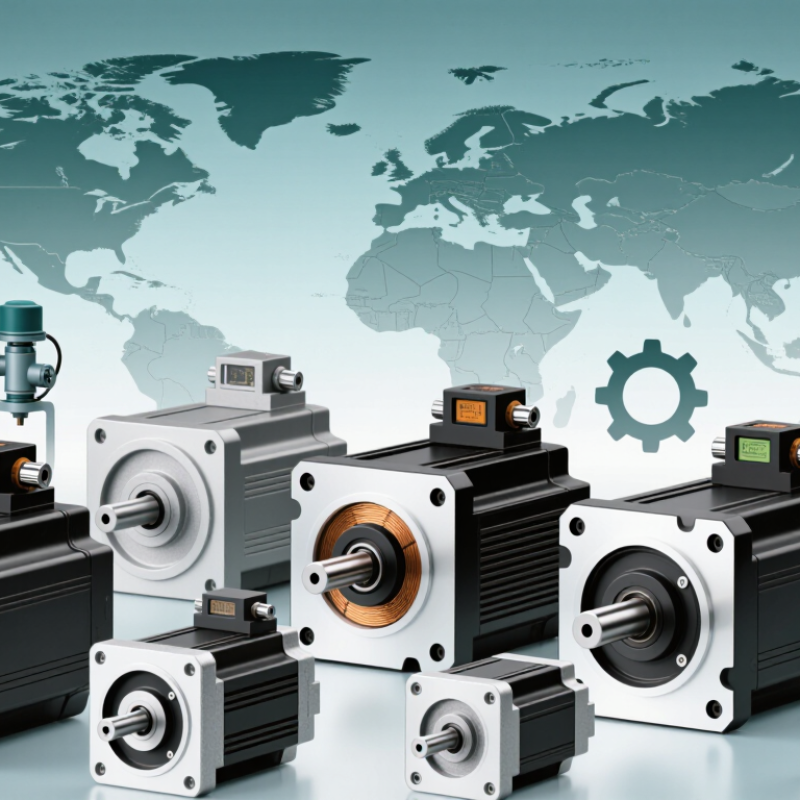
A brushless DC motor converts electrical energy into mechanical rotation without physical brushes. Its stator contains copper windings, while its rotor usually carries permanent magnets. Electronic switching replaces the commutator used in brushed motors. No brushes are rubbing.
The controller energizes each winding in a precise sequence. This changing magnetic field pulls and pushes the rotor around the stator. Hall sensors can report rotor position to the controller. Sensorless designs estimate position from electrical signals. Both methods have advantages. The switching pattern affects torque, noise, heat, and efficiency. Timing matters. Poor commutation can create vibration and wasted energy.
For global buyers in 2026, the motor’s operating details matter more than impressive headline efficiency. Check voltage range, continuous torque, peak torque, speed, cooling method, insulation rating, and environmental protection. A motor may perform well in a clean laboratory but struggle inside a dusty machine cabinet. Installation also changes results. Cable length, controller settings, load cycles, and alignment can alter temperature and service life. I have seen specifications appear adequate until starting torque exposed a weakness. The simplest explanation is useful, but incomplete. Real testing under the intended load remains essential. Datasheets should state test conditions clearly, yet some leave important details vague. That deserves careful questioning before purchase.
Brushless DC motors use electronic commutation instead of mechanical brushes. A controller switches current through the stator windings according to rotor-position feedback or sensorless control, creating a rotating magnetic field that drives the permanent-magnet rotor. The chart shows representative continuous and peak efficiency ranges for common BLDC applications. Actual performance depends on motor size, winding design, controller quality, operating speed, load, cooling, and duty cycle.
Choosing a brushless DC motor starts with the application, not the catalog rating. Inrunner motors suit high-speed tools, pumps, and compact machines. Their rotating mass stays low, improving rapid acceleration. Outrunner motors provide stronger torque at lower speeds. They work well in conveyors, cooling fans, and robotic joints. I have seen buyers select motors by peak power alone. That mistake often causes overheating during continuous operation.
Sensored motors deliver reliable starting and precise low-speed control. They fit electric actuators, medical equipment, and positioning systems. Sensorless motors reduce wiring and cost. However, they may struggle during startup or sudden load changes. Flat motors suit narrow spaces, while geared brushless motors support heavy loads. Check voltage, continuous torque, duty cycle, noise, and heat dissipation together. A motor can look efficient on paper but perform poorly inside a sealed housing.
Tips: Measure the real load first. Leave thermal headroom. Confirm controller compatibility and feedback requirements. Test startup torque under the heaviest expected load. Review regional voltage, safety, and electromagnetic compatibility requirements. Do not ignore mounting tolerances; small alignment errors can create vibration. That detail is easy to miss.
For global buyers, a brushless DC motor should be judged beyond its rated wattage. Compare continuous torque, peak torque, speed range, thermal rise, acoustic noise, and controller compatibility. Efficiency must be measured at the actual operating point, not only at maximum efficiency.
The U.S. Department of Energy reports that motor-driven systems use about 68% of industrial electricity, while system improvements can reduce consumption by 10–20%. This makes partial-load efficiency important.
A motor running a conveyor at 40% load may waste more energy through poor control than its datasheet suggests.
Check test conditions carefully. Ambient temperature, winding temperature, voltage, and duty cycle can change results. IEC 60034-30-1 provides efficiency-class guidance for rotating motors, but a BLDC motor and its electronic drive should be evaluated as one system.
The International Energy Agency has estimated that electric motor systems consume roughly 46% of global electricity.
Small efficiency gains matter. Very much.
Ask for life data under vibration, dust, and repeated starts. A claimed 20,000-hour life may assume ideal cooling. That is a weakness worth questioning.
Field experience also shows that connector quality and controller tuning can cause failures before the motor wears out.
Compare measured efficiency maps, not isolated laboratory peaks. Require sample testing at your real voltage, load, and ambient temperature before approving large-volume procurement.
2026 Best Brushless DC Motors for Global Buyers?
Before purchasing a brushless DC motor, match its specifications to the actual machine load. Rated voltage must suit your power system, while startup current should fit the controller and battery. Check continuous torque, peak torque, speed range, and duty cycle together. A motor may advertise impressive peak output, but that figure often lasts only seconds. Continuous performance matters more for pumps, conveyors, and production equipment.
Thermal data deserves careful attention. Review winding temperature limits, cooling requirements, insulation class, and allowable ambient temperature. In humid or dusty locations, verify the enclosure rating and corrosion resistance. Confirm shaft dimensions, mounting holes, bearing life, and rotor balance before ordering. Feedback options also matter. Hall sensors, encoders, or sensorless control can affect positioning accuracy and startup behavior. In my experience, small mechanical mismatches create expensive installation delays. Datasheets can also omit real operating noise and vibration, so request test reports or samples.
Tips: Ask for efficiency curves, not only one efficiency percentage. Compare performance at your real voltage, load, and speed. Confirm controller compatibility in writing. Check certifications required in the destination market. Leave thermal margin; operating at the limit is rarely wise. One overlooked detail remains shipping protection. A damaged connector or bent shaft can ruin an otherwise suitable motor. Evaluate service support, replacement timing, and documentation quality before choosing the lowest quotation.
| Motor Category | Typical Rated Voltage | Typical Continuous Power | Typical Speed Range | Typical Continuous Torque | Feedback and Commutation | Typical Efficiency | Recommended Application | Key Evaluation Points for Global Buyers |
|---|---|---|---|---|---|---|---|---|
| Compact Fan and Blower Motor | 12–48 VDC | 5–150 W | 1,500–8,000 rpm | 0.01–0.50 N·m | Sensorless or Hall sensors; trapezoidal or sinusoidal control | 60–85% | Cooling fans, ventilation units, small air-moving equipment | Airflow and static pressure, acoustic noise, locked-rotor protection, operating temperature, and connector compatibility |
| General Industrial BLDC Motor | 24–96 VDC | 100 W–3 kW | 500–6,000 rpm | 0.3–15 N·m | Hall sensors, incremental encoder, or resolver; six-step or field-oriented control | 80–93% | Conveyors, pumps, machine tools, packaging equipment | Duty cycle, overload capacity, thermal derating, shaft and bearing life, mounting dimensions, and controller integration |
| High-Speed BLDC Motor | 24–400 VDC | 200 W–10 kW | 6,000–60,000 rpm | 0.03–8 N·m | Usually encoder-based or resolver-based for precise control; high-speed FOC recommended | 80–95% | Compressors, spindles, centrifugal blowers, laboratory equipment | Rotor balance, maximum mechanical speed, bearing technology, inverter switching frequency, cooling method, and overspeed protection |
| Low-Voltage Mobility Motor | 24–72 VDC | 250 W–8 kW | 500–5,000 rpm | 1–40 N·m | Hall sensors or encoder; regenerative braking may be supported | 82–94% | AGVs, electric scooters, light utility vehicles, mobile robots | Peak torque, regenerative braking, battery current limits, vibration resistance, thermal management, and functional safety requirements |
| Servo-Grade BLDC Motor | 48–400 VAC or VDC | 200 W–15 kW | 1,000–6,000 rpm | 0.6–80 N·m | High-resolution encoder or resolver; closed-loop field-oriented control | 85–96% | Robotics, CNC equipment, indexing systems, precision automation | Position accuracy, encoder resolution, peak torque duration, inertia matching, backlash-free coupling, braking resistor requirements, and communication protocol |
| Water-Resistant BLDC Motor | 12–96 VDC | 50 W–5 kW | 300–4,000 rpm | 0.2–30 N·m | Hall sensors or sealed sensorless design | 70–92% | Outdoor equipment, marine auxiliaries, pumps, agricultural machinery | Ingress protection rating, corrosion-resistant materials, cable sealing, condensation control, salt exposure, and continuous-load cooling |
| Medical and Laboratory BLDC Motor | 12–48 VDC | 10–800 W | 100–10,000 rpm | 0.01–5 N·m | Low-noise Hall sensors, encoder, or sensorless control depending on precision needs | 70–92% | Centrifuges, pumps, analyzers, patient-care equipment, laboratory automation | Low vibration, acoustic noise, cleanability, electromagnetic compatibility, thermal rise, traceability, and applicable medical-device requirements |
| High-Torque Geared BLDC Motor | 12–96 VDC | 50 W–3 kW | 10–1,500 rpm at output shaft | 1–250 N·m | Hall sensors or encoder; gearbox may use spur, planetary, or helical stages | 55–90% system efficiency | Actuators, lifting systems, automated doors, valves, material handling | Gear ratio, output backlash, radial and axial load, shock load, duty cycle, lubrication, holding-brake option, and gearbox service life |
| Energy-Efficient Pump Motor | 24–400 VDC or 110–480 VAC through a drive | 100 W–20 kW | 500–3,600 rpm | 0.5–100 N·m | Sensorless or closed-loop FOC; variable-speed operation commonly supported | 80–96% | HVAC pumps, water circulation, dosing systems, industrial fluid handling | Flow and head curve, fluid temperature, seal design, cavitation margin, corrosion resistance, energy consumption, and variable-speed-drive compatibility |
Choosing a brushless DC motor in 2026 starts with the supplier, not the catalog price. Ask for winding data, torque curves, rotor balance records, and sample test results. A reliable supplier should explain temperature rise, bearing life, noise, vibration, and IP protection clearly. Request a factory audit or live production inspection. Check whether serial numbers support traceability. Small details matter. A polished website proves very little.
Certifications must match the destination market and the complete motor assembly. Depending on the application, buyers may need CE, UL-related documentation, RoHS, REACH, or IEC test evidence. Verify certificate numbers, issuing bodies, product models, and report dates. Do not accept a generic PDF. It may cover a different motor. I would also confirm insulation class, EMC performance, and safety testing with an independent laboratory when the application is critical. Compliance is not a decoration.
Delivery planning needs equal attention. Confirm production capacity, sample approval time, minimum order quantity, packaging protection, Incoterms, customs documents, and spare-part availability. Ask for a written schedule with inspection checkpoints. Keep buffer time for port congestion and corrective production. Air freight may protect a launch date, but it can damage margins. Sea freight costs less, yet delays can be painful. A supplier may promise eight weeks, but actual output can change. My checklist is useful, not perfect; seasonal demand, material shortages, and changing regulations still require human judgment.
Inrunner motors fit high-speed tools, pumps, and compact machines. Their low rotating mass supports fast acceleration. Check cooling carefully.
Outrunner motors provide higher torque at lower speeds. They suit conveyors, cooling fans, and robotic joints. Do not judge by peak power alone.
Sensored motors offer dependable starting and accurate low-speed control. Sensorless motors reduce wiring and cost. Startup performance may be less stable.
Compare voltage, continuous torque, peak torque, speed range, and duty cycle. Peak output may last only seconds. Continuous performance matters more.
Review winding temperature limits, cooling needs, insulation class, and ambient temperature. Leave thermal headroom. A sealed housing can trap heat.
Check shaft size, mounting holes, bearing life, rotor balance, and alignment tolerances. A small mismatch can create vibration. This detail is easy to miss.
Confirm destination-market requirements, relevant safety evidence, electromagnetic compatibility tests, and material compliance documents. Verify model numbers and report dates. Do not accept a generic PDF.
Request torque curves, winding data, sample results, inspection records, and traceable serial numbers. Confirm packaging, production timing, customs documents, and spare parts. A polished website proves very little.
Test startup torque under the heaviest expected load. Compare efficiency at real voltage, speed, and load. Request noise and vibration results. My checklist helps, but it is not perfect.
This guide explains how Brushless DC Motors operate through electronically controlled commutation, eliminating the need for mechanical brushes and enabling smooth, efficient, and reliable performance. It compares key motor types, including inrunner, outrunner, sensored, and sensorless designs, helping global buyers match motor structure and control method to applications such as automation, robotics, cooling systems, electric mobility, and precision equipment.
The article also outlines how to evaluate torque, speed, power density, efficiency, noise, thermal performance, service life, and control compatibility. Before purchasing, buyers should review voltage, current, shaft design, dimensions, protection rating, operating environment, and customization requirements. Finally, it highlights the importance of selecting capable suppliers, verifying quality systems and relevant certifications, confirming testing procedures, and assessing lead times, packaging, shipping options, after-sales support, and regional compliance to achieve dependable delivery and long-term value in 2026.